
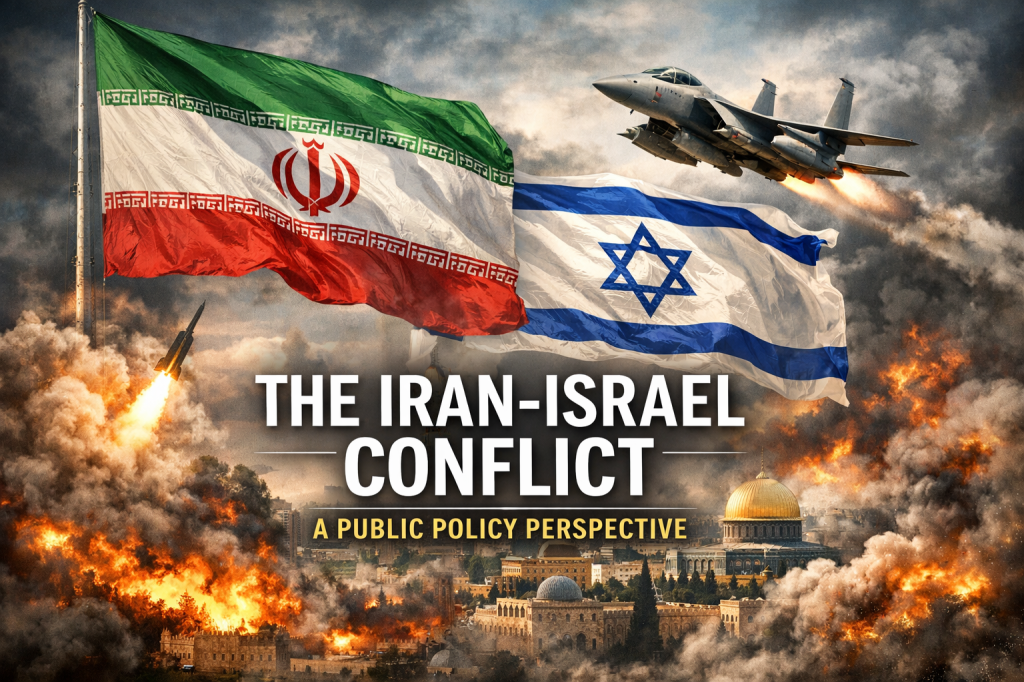
In late February 2026, the Middle East entered a period of intense conflict that has rapidly escalated into one of the most significant geopolitical crises of the decade. On February 28, 2026, Israel and the United States launched coordinated airstrikes against targets in Iran, marking the beginning of a major military confrontation between the nations. This operation, referred to by Israel as Operation Lion’s Roar, focused on Iranian military infrastructure, leadership sites, and nuclear-related facilities.
The strikes included the killing of Iran’s Supreme Leader, Ayatollah Ali Khamenei, a historic turning point that instantly elevated the scope and stakes of the conflict. This was followed by retaliatory actions by Iran, including missile and drone attacks targeting Israel, Gulf states, and U.S. military bases in the region. Iran’s actions also disrupted global energy shipping routes and added complexity to an already unstable situation.
Roots of the Conflict
To understand the current crisis, it’s important to recognize the long-standing tensions between Iran, Israel, and the United States. For decades, disagreements over Iran’s nuclear ambitions, support for proxy militias across the Middle East, and conflicting regional goals have simmered beneath the surface. Previous diplomatic efforts — including negotiations aimed at limiting Iran’s nuclear program — repeatedly stalled, increasing the likelihood of military confrontation.
From a policy perspective, these escalations reflect a deeper dilemma in international relations: how to balance concerns about national security with the risks that come with military action. While Israel and the U.S. claim their strikes were pre-emptive measures against a perceived threat, critics argue that such actions bypass diplomatic channels and could destabilize the region further.
The Regional and Global Impact
The conflict has already had ripple effects far beyond the borders of the nations directly involved. In the Gulf region, countries like the United Arab Emirates and Qatar were hit by Iranian missiles and drones, disrupting everyday life and international commerce. Major airlines extended flight cancellations due to security concerns, highlighting how regional instability can disrupt global transportation networks and economic activity.
Across the Middle East, allied and proxy groups such as Hezbollah — a militant organization based in Lebanon — have stepped into the fight, launching their own attacks against Israel. This has led to violence in Lebanon and increased displacement of civilians, deepening humanitarian concerns.
International reactions have been mixed. Some global powers and international organizations have urged restraint and diplomacy, emphasizing the need to avoid further escalation. Others, particularly in the Global South, have condemned the strikes as violations of international law and signs of unchecked military power. These divergent responses underscore the geopolitical complexity at play, where alliances, legal norms, and strategic interests intersect.
Public Policy Questions at the Forefront
This conflict raises critical questions for public policy scholars and practitioners:
1. When is military force justified?
One of the most debated policy questions centers on the conditions under which military intervention is justified. Supporters of Israel and U.S. actions argue that pre-emptive defense is necessary to protect national security. Opponents argue that without clear evidence of imminent threat or broad international authorization, such strikes may undermine international law and increase global insecurity.
2. What are the limits of diplomacy?
Many experts warn that military action often closes doors for negotiation, complicating efforts to achieve long-term peace. Policymakers must weigh the immediate goals of neutralizing threats against the long-term need for diplomatic solutions that address underlying grievances and regional stability.
3. How do allies and global institutions react?
The conflict highlights tensions within international alliances and institutions. Some U.S. partners have called for restraint, while others have unequivocally supported the offensive. At the same time, the United Nations and other multilateral bodies are being pressured to respond to an unfolding crisis that has implications for global security norms.
Conclusion: A Turning Point with Uncertain Outcomes
The Iran–Israel conflict of 2026 represents more than a regional war; it embodies the complex interplay between security, law, diplomacy, and power in world affairs. For students of public policy, this moment is a powerful case study in how decisions made by governments can have far-reaching consequences — both intended and unintended.
As the crisis continues to unfold, it remains crucial for policymakers and global citizens alike to ask hard questions about the role of force, the value of diplomacy, and our collective responsibility in shaping a more secure and just world.
 Public Policy With Talia
Leave a comment