
By Public Policy with Talia
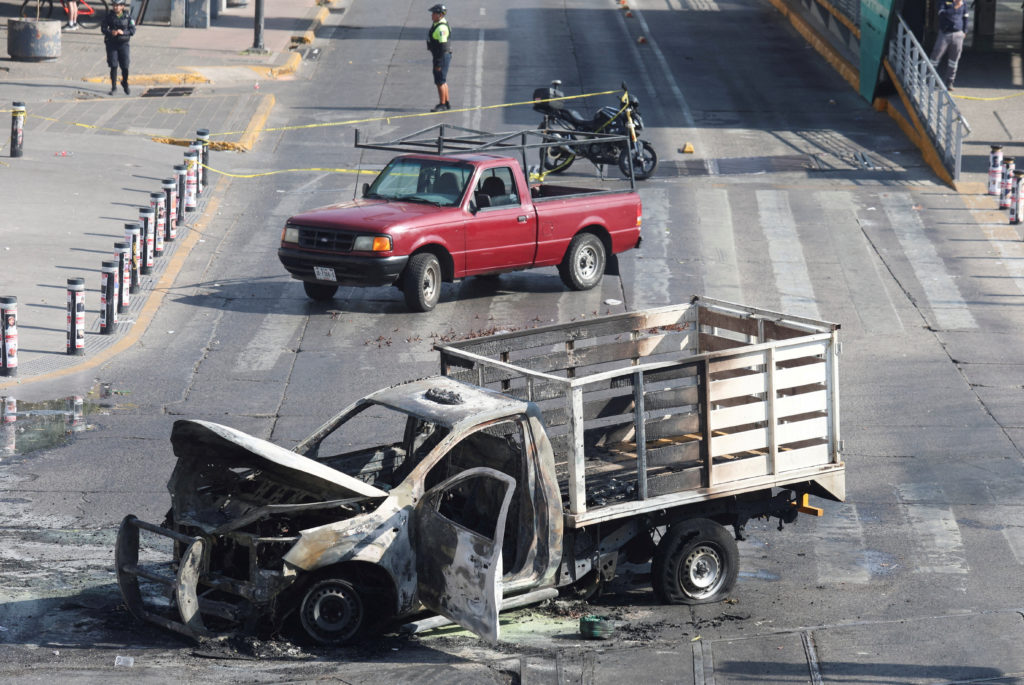
Across Mexico, escalating cartel violence has reignited global concern over organized crime, border security, and government stability. At the center of this crisis is Nemesio Oseguera Cervantes, better known as El Mencho, the leader of the powerful Cártel Jalisco Nueva Generación (CJNG). As one of the most wanted fugitives in the world, El Mencho represents more than just a criminal figure—he symbolizes the complex public policy challenges facing Mexico and the United States today.
El Mencho rose to power in the early 2010s after internal conflicts weakened other criminal groups. Under his leadership, CJNG transformed into one of Mexico’s most dominant and aggressive cartels. Unlike older trafficking organizations that operated more discreetly, CJNG has become known for its open displays of force, including armed convoys, military-style weapons, and violent territorial expansion. The cartel is heavily involved in the production and trafficking of synthetic drugs, particularly fentanyl and methamphetamine, which are exported primarily to the United States.
The United States government has charged El Mencho with multiple drug trafficking and weapons offenses and has offered a reward of up to $10 million for information leading to his capture. Despite ongoing efforts by Mexican security forces, he remains at large. His ability to evade capture highlights broader concerns about corruption, institutional weakness, and the limits of enforcement-based strategies.
In recent years, Mexico has struggled with persistent cartel-related violence. States such as Jalisco, Michoacán, and Guanajuato have experienced significant spikes in homicides and clashes between rival groups. Under former President Andrés Manuel López Obrador, the government emphasized a strategy focused more on social programs and economic development than on direct military confrontation. Critics argue that this approach has not significantly reduced cartel influence, while supporters contend that long-term stability requires addressing poverty and inequality rather than relying solely on force.
The situation raises important public policy questions. First, cartel violence is not confined within national borders. The demand for narcotics in the United States fuels cartel profits, making this a shared responsibility. Effective policy responses require binational cooperation in intelligence sharing, financial sanctions, and border security. Second, strengthening institutions within Mexico—including law enforcement, courts, and anti-corruption agencies—is essential to restoring public trust. Third, long-term prevention strategies must focus on expanding economic opportunity, particularly for young people in vulnerable communities.
The case of El Mencho illustrates a larger truth: organized crime has evolved into sophisticated, transnational enterprises capable of challenging state authority. Capturing one leader may weaken a cartel temporarily, but sustainable change depends on comprehensive policy reform that addresses both supply and demand.
For students and future policymakers, the crisis in Mexico offers a real-time example of how security, economics, and governance intersect. Understanding figures like El Mencho is not about sensationalism—it is about analyzing how public policy decisions shape regional stability and international relations.
As debates continue in both Mexico and the United States, one thing is clear: the fight against cartel violence is not simply a law enforcement issue. It is a test of institutional strength, cross-border cooperation, and the ability of governments to protect their citizens while upholding the rule of law.
Works Cited
“Cártel Jalisco Nueva Generación (CJNG).” U.S. Department of Justice, Drug Enforcement Administration, http://www.dea.gov.
“Cártel Jalisco Nueva Generación.” Council on Foreign Relations, http://www.cfr.org.
“Nemesio Oseguera Cervantes (El Mencho).” Federal Bureau of Investigation, Most Wanted Fugitives, http://www.fbi.gov.
“Mexico: Organized Crime and Drug Trafficking Organizations.” Congressional Research Service, crsreports.congress.gov.
Phillips, Tom. “Mexico’s Cartel Violence and the Rise of CJNG.” The Guardian, http://www.theguardian.com.
“Mexico Drug War Fast Facts.” CNN, http://www.cnn.com
 Public Policy With Talia
Leave a comment