
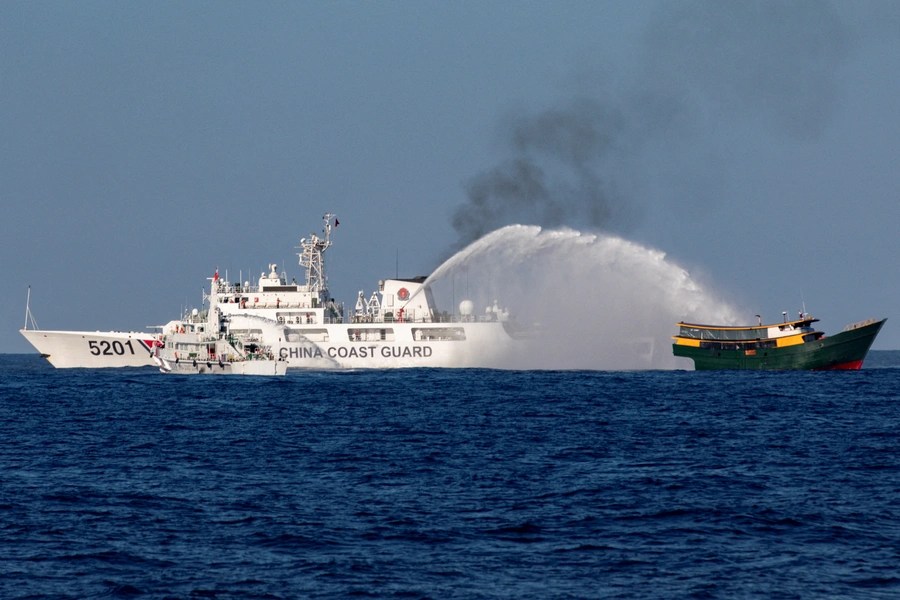
Tensions in the South China Sea have escalated sharply in recent months, as confrontations between China and the Philippines grow more frequent and more dangerous. What may appear to be a regional maritime dispute is, in reality, a defining test of international law, alliance credibility, and the future balance of power in Asia.
The South China Sea is one of the most strategically important waterways in the world. An estimated one-third of global maritime trade passes through it annually, carrying energy supplies, food, and manufactured goods critical to the global economy. Competing territorial claims — particularly China’s expansive “nine-dash line” — have turned routine navigation into flashpoints for confrontation.
Why the Situation Is Escalating Now
Recent incidents involving water cannons, ship collisions, and aggressive maneuvers between coast guard vessels have marked a shift from diplomatic disputes to physical confrontation. While no shots have been fired, the increased frequency of these encounters raises the risk of miscalculation.
At the heart of the conflict is enforcement. An international tribunal ruled in 2016 that China’s sweeping claims had no legal basis under international law, yet enforcement mechanisms remain weak. Without a clear way to compel compliance, smaller states are left relying on alliances, diplomacy, and limited deterrence.
The Global Stakes
This dispute extends far beyond Southeast Asia. Freedom of navigation is a cornerstone of international trade, and any precedent allowing one nation to control contested waters threatens the global system itself. If maritime law can be ignored without consequence, similar challenges could emerge in other strategic regions.
The situation also tests the credibility of international alliances. Regional partners and global powers are closely watching how aggressively violations are challenged — or tolerated. A weak response risks emboldening further assertive behavior, while an overly aggressive one risks military escalation.
A Policy Dilemma Without Easy Answers
Policymakers face a difficult balancing act. Escalation could destabilize the region, disrupt trade, and draw major powers into conflict. Inaction, however, undermines international law and encourages further challenges to the rules-based order.
Some experts argue for stronger multilateral responses through regional organizations, while others emphasize the need for economic pressure and diplomatic isolation. What is clear is that relying solely on statements of concern is no longer sufficient.
Why This Matters for the Next Generation
For younger generations, the South China Sea dispute is a reminder that global stability depends on rules and on the willingness to enforce them. The outcome will shape not only regional security, but the future of international cooperation in an increasingly multipolar world.
Public policy is not just about resolving conflicts after they erupt. It is about preventing the slow erosion of norms that make peace and global commerce possible in the first place.
 Public Policy With Talia
Leave a comment