
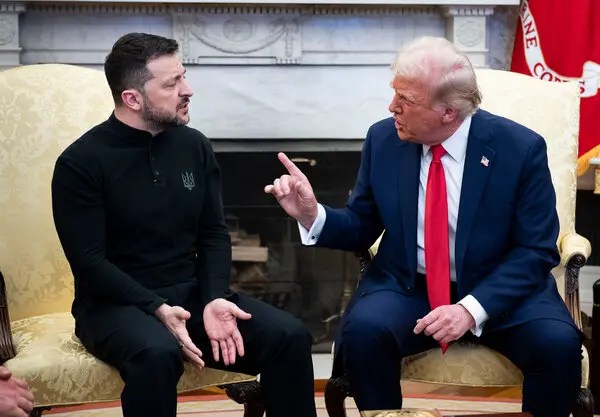
In a dramatic turn of events, Ukrainian President Volodymyr Zelensky’s recent visit to the White House ended in a tense exchange with U.S. President Donald Trump, leading to an abrupt halt in their discussions and Zelensky’s early departure. The meeting, initially intended to strengthen diplomatic ties and discuss continued U.S. support for Ukraine, quickly devolved into a heated dispute over key policy issues, particularly regarding military aid and resource agreements.
The primary source of contention centered on a proposed deal that would grant U.S. companies the rights to extract rare minerals from Ukraine in exchange for continued American financial and military support. Ukraine, known for its vast reserves of lithium, titanium, and other critical minerals, has become an essential player in the global market for these valuable resources. Trump, advocating for what he deemed a favorable agreement for the United States, pushed for greater access to these minerals, while Zelensky firmly resisted any terms that he believed would compromise Ukraine’s sovereignty and economic stability.
As tensions escalated, the conversation became increasingly confrontational. Sources familiar with the meeting indicated that Trump grew frustrated with Zelensky’s unwillingness to concede on the issue, leading to a breakdown in diplomatic negotiations. In an unprecedented move, Trump walked out of the discussion, effectively ending any further talks. Zelensky was subsequently escorted out of the White House, signaling a significant strain in U.S.-Ukraine relations.
This incident has sparked widespread speculation about the future of American support for Ukraine. Trump has long been vocal about his skepticism regarding continued U.S. military assistance to Ukraine, repeatedly arguing that European nations should shoulder more of the financial burden. His stance has gained traction among certain segments of the American electorate who are increasingly wary of the country’s prolonged involvement in foreign conflicts. The fallout from this meeting raises concerns that if Trump were to return to office, Ukraine could see a substantial reduction in U.S. aid, forcing it to seek alternative support from other global allies.
In the wake of the White House dispute, Zelensky traveled to London, where he met with British Prime Minister Keir Starmer. In contrast to the strained interactions in Washington, the meeting with Starmer resulted in a significant commitment of financial assistance. The United Kingdom pledged a $3.3 billion loan package to bolster Ukraine’s military capabilities, a move that underscores Europe’s growing role in supporting the country. Other European leaders, including French President Emmanuel Macron and German Chancellor Olaf Scholz, reaffirmed their commitment to Ukraine’s defense and emphasized the need for Europe to strengthen its own security measures.
The developments surrounding Zelensky’s White House visit highlight broader geopolitical shifts. With uncertainty looming over the future of U.S. support, Europe appears to be stepping up its efforts to fill any potential gaps left by American hesitation. However, challenges remain, as Ukraine’s long-term security depends on sustained military and economic assistance. The outcome of the upcoming U.S. presidential election will likely play a decisive role in shaping the country’s foreign policy stance on Ukraine.
Zelensky’s confrontation with Trump serves as a critical moment in the ongoing war and the international response to it. The meeting’s abrupt end raises questions about the stability of diplomatic relations between the two nations and the broader implications for Ukraine’s fight against Russian aggression. With the global order in flux, the future of U.S.-Ukraine relations remains uncertain, leaving both Ukraine and its allies to navigate an increasingly complex political landscape.
 Public Policy With Talia
Leave a comment