
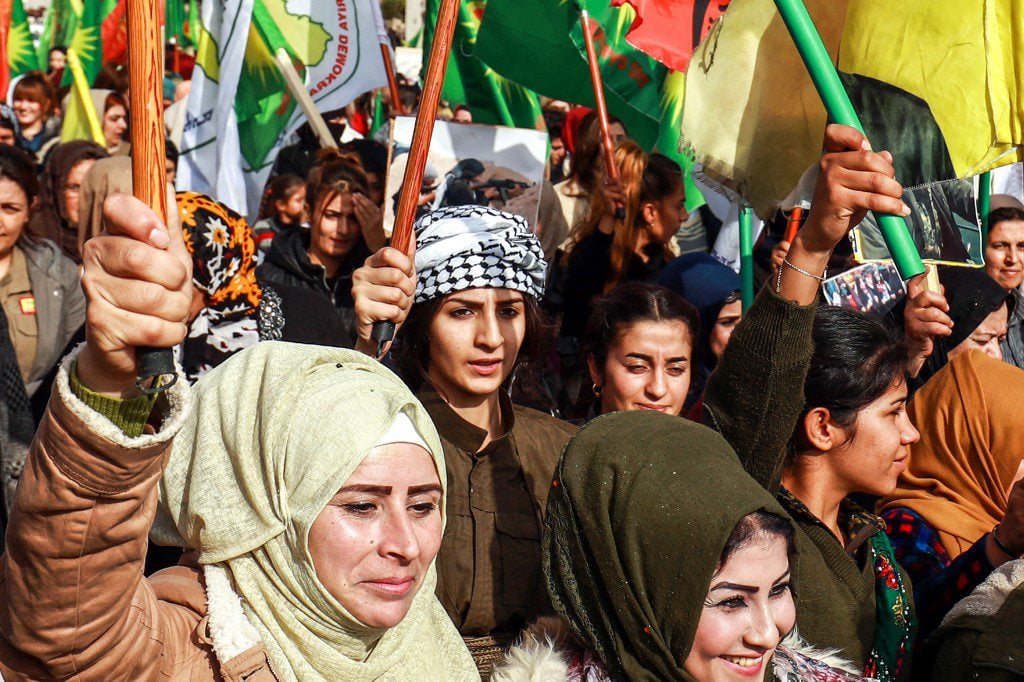
Ensuring women’s rights in the Middle East is crucial for promoting both regional stability and sustainable development. Advancing women’s rights is an issue of fairness and an essential strategic necessity for attaining enduring peace and advancement. Despite persistent challenges and intricate regional circumstances, bolstering women’s empowerment is critical to surmounting social and political barriers and fostering general stability and prosperity in the Middle East.
The position of women in the Middle East has experienced substantial transformations from ancient to present-day periods. During the early Islamic communities, women possessed rights and fulfilled responsibilities that were comparatively advanced for that era. Early Islamic law granted women marriage, divorce, and property ownership rights. Historical characters like Khadijah, the first wife of the Prophet Muhammad, exerted significant influence and occupied positions of authority within the community. Khadijah’s position as a female entrepreneur and her impact on early Islamic history highlight the comparatively elevated position of women in early Islamic cultures.
Throughout the centuries, the understanding and application of religious and cultural norms have imposed limitations on women’s rights. Within the context of the Ottoman Empire, women were permitted certain rights, but societal norms and legal traditions often restricted their liberties. The consequences of European colonialism added extra complexity to this situation. European colonial powers enforced Western legal systems, and gender norms frequently clashed with local customs. British and French colonial governments implemented legislative systems that downplayed the rights of women, causing disruption to established social systems and hindering the advancements made in previous eras.
After the conclusion of colonial authority, numerous Middle Eastern nations started to tackle gender issues with more emphasis. During the 1920s and 1930s, Mustafa Kemal Atatürk led Turkey and implemented significant changes, including the enfranchisement of women, allowing them to vote and hold public office. In addition, Egypt made considerable progress in women’s rights, granting women the privilege to vote in 1956 and enhancing their access to education and employment prospects. Although there have been significant improvements, growth in the region has not been consistent since several countries have faced setbacks due to conservative cultural values and political instability.
The convergence of women’s rights and national security is deep and complex. The interplay of gender dynamics can profoundly affect the stability of society and the ability to resolve conflicts. Gender-based violence (GBV), including domestic violence, honor killings, and conflict-related sexual violence, erodes communal unity and perpetuates cycles of conflict. It is imperative to tackle these concerns to establish resilient and safe societies.
Domestic violence continues to be a widespread problem in most MENA nations. For instance, a survey conducted in Jordan in 2017 found that approximately 30% of women had encountered incidents of domestic violence. The significant prevalence of violence hinders women’s capacity to engage fully in society and has an impact on the general stability of society. Honor killings, although being subject to legal reforms, continue to exist in certain regions as a result of firmly ingrained cultural customs. In Pakistan, despite the implementation of legal measures intended to mitigate honor killings, the practice persists, underscoring the difficulties of altering deeply ingrained community values.
War-related sexual violence intensifies instability in areas affected by war. Reports have highlighted the utilization of sexual violence as a strategic weapon in the context of the Syrian conflict. This violence not only affects the immediate victims but also exacerbates broader societal instability and economic adversity. Sexual violence employed in conflict settings has been demonstrated to erode social unity and sustain patterns of violence.
On the other hand, research has demonstrated that incorporating women into security forces and peacekeeping missions improves efficiency and contributes to more comprehensive plans for resolving conflicts. Women in Tunisia have progressively enlisted in the military and police forces, resulting in enhanced security measures and more efficient peacekeeping missions. Including women in these positions introduces varied viewpoints and methodologies, augmenting the overall efficacy of security operations.
However, obstacles continue to exist despite these accomplishments. Women in Lebanon have achieved notable progress in their inclusion in the police force. However, they encounter obstacles such as discriminatory policies and limited prospects for career progression. Women in Lebanon’s security forces frequently experience challenges attaining high-ranking positions and encounter social opposition to their involvement in security matters. Overcoming these obstacles is crucial for fully utilizing women’s capabilities in strengthening national and regional security.
Promoting women’s rights has been associated with heightened social stability and economic progress. Women who are empowered make significant contributions to the growth of the economy and to improved outcomes in health and education. Additionally, their empowerment also leads to a reduction in conflicts. For example, in Rwanda, the growth in women’s political representation has led to significant improvements in social and economic metrics. Rwanda’s parliament boasts the most important proportion of female MPs worldwide, a factor that has significantly contributed to the nation’s stability and progress.
Similarly, studies suggest that nations with elevated degrees of gender equality, such as Norway and Sweden, encounter enhanced stability and prosperity. Research has demonstrated a positive correlation between a rise in the number of women participating in the workforce and faster rates of economic growth as measured by GDP and improved social indicators. For instance, a 2019 study conducted by the McKinsey Global Institute revealed that if gender disparities in labor force participation were eliminated, it might contribute an additional $28 trillion to the global Gross Domestic Product (GDP) by 2025. This research highlights the possibility of achieving similar advancements in the MENA area by strengthening women’s rights.
The economic advantages of women’s empowerment are significant. The enhanced involvement of women in the labor market can result in elevated productivity and economic expansion. For instance, in the United Arab Emirates, endeavors to enhance women’s involvement in different industries have expanded economic diversification and fostered growth. The UAE has developed measures to bolster women’s workforce participation, encompassing initiatives to assist women entrepreneurs and professionals.
The success of public policy addressing women’s rights and national security in the MENA area varies. Several nations have implemented progressive legislation to enhance women’s social standing. These laws include legal measures to combat gender-based violence and initiatives to promote more female involvement in politics. For example, Saudi Arabia has implemented reforms, such as granting women the right to drive and enhancing their participation in the labor market. While these reforms are indeed a positive move, they typically need to be revised regarding their breadth and implementation.
However, the execution of policies sometimes lacks uniformity, notwithstanding these progressions. Numerous nations encounter difficulties in implementing legislation, countering societal opposition, and offering sufficient resources and assistance for women. In Egypt, there are legislative frameworks in place to handle sexual harassment. However, the enforcement of these laws is not vigorous, and societal attitudes toward harassment might impede the practical application of these laws. Furthermore, insufficient support services, such as shelters and legal aid, worsen the challenges encountered by women who are victims of violence.
The primary deficiencies and obstacles to the current policy include insufficient legal safeguards, societal opposition, and restricted resources. Numerous legal systems lack sufficient safeguards to protect women from violence and prejudice adequately. In Yemen, where legal safeguards for women are scarce, the prevalence of violence against women persists. Societal norms often impede the effective implementation of women’s rights policies. Women in Iran face cultural and legal obstacles that hinder their ability to participate in public positions, hence restricting their chances for progress.
To tackle these issues, several enhancements are suggested. It is essential to enhance the legal frameworks by implementing and ensuring the enforcement of comprehensive legislation that safeguards women from violence and discrimination. For instance, Morocco’s 2004 Family Code amendments constituted a substantial advancement in women’s rights. However, additional endeavors are required to guarantee the successful execution of these reforms. It is crucial to improve support services, including the establishment and financing of shelters, legal assistance, and counseling for individuals who have experienced gender-based violence.
Furthermore, we may effectively tackle these problems by implementing policies that foster gender inclusion and actively supporting women’s involvement in various areas, such as security and governance. To make progress in this regard, it is also crucial to challenge cultural conventions that restrict women’s responsibilities. In the United Arab Emirates, selecting an equal number of male and female ministers is a positive move towards achieving gender equality. However, further actions are necessary to ensure complete inclusivity.
Advocating for women’s rights in the Middle East is crucial for enduring peace and progress. The convergence of gender equality and national security underscores the significance of tackling gender-based violence, enhancing women’s involvement in security positions, and executing efficient public policies. Promoting gender equality tackles social justice concerns and fosters overall societal stability and economic prosperity. This research emphasizes the importance of women’s empowerment in addressing social and political challenges in the MENA area. The significance is evident for international proponents of women’s rights: focused interventions and assistance for continuous endeavors to enhance gender parity are essential for cultivating stable and affluent communities in the Middle East. Amidst the ongoing complexities in the region, it is crucial to prioritize promoting women’s rights as an integral part of initiatives to attain sustainable peace and growth.
 Public Policy With Talia
Leave a comment